
Sexual harassment has no place in the California workplace. Yet inappropriate comments, unwanted advances, sexualized messages, unwanted touching, and other forms of gender-based misconduct continue to affect employees across industries. California law provides strong protections for workers who experience sexual harassment and offers legal remedies when employers or individuals fail to prevent or correct unlawful conduct.
What Constitutes Sexual Harassment in California?
Under California’s Fair Employment and Housing Act (FEHA), sexual harassment can take many forms. It may include unwanted sexual advances, sexually suggestive comments or jokes, leering or gestures, displaying sexually suggestive images, unwanted physical contact, or offering employment benefits in exchange for sexual favors. Sexual harassment does not have to be motivated by sexual desire, and people of any gender or sexual orientation can be victims or perpetrators.
There are generally two common forms of workplace sexual harassment. Quid pro quo harassment occurs when employment decisions or benefits—such as promotions, desirable assignments, or continued employment—are conditioned on submitting to sexual conduct. Hostile work environment harassment occurs when unwelcome sex-based conduct is sufficiently severe or pervasive to interfere with an employee’s work or create an intimidating, hostile, or offensive workplace. In some circumstances, a single particularly severe incident may be enough to constitute unlawful harassment.
Importantly, harassment does not necessarily have to be directed at the person who ultimately brings a claim. Employees can be affected by offensive conduct they witness or are exposed to in the workplace.
Employers Can Face Significant Consequences
California places substantial responsibility on employers to maintain workplaces free from unlawful harassment. Employers have an affirmative obligation to take reasonable steps to prevent and promptly correct discriminatory and harassing conduct. California employers with five or more employees also generally must provide sexual-harassment-prevention training to supervisory and nonsupervisory employees at required intervals.
An employer may face liability for harassment committed by supervisors and may also be responsible for coworker or third-party harassment when the employer knew or should have known about the conduct and failed to take immediate and appropriate corrective action.
The consequences can extend beyond the harassment itself. An employer that retaliates against an employee for reporting harassment, opposing unlawful conduct, or participating in an investigation may face an additional legal claim. Retaliation can include termination, demotion, disciplinary action, undesirable reassignment, or other adverse treatment motivated by the employee’s protected activity.
What Can a Sexual Harassment Victim Recover?
A successful sexual harassment claim may result in substantial remedies, depending on the circumstances. Potential recovery can include lost wages, future lost earnings, out-of-pocket expenses, compensation for emotional and mental distress, punitive damages and attorney’s fees and costs. Other remedies may include reinstatement, promotion, and policy changes.
Taking Action After Sexual Harassment
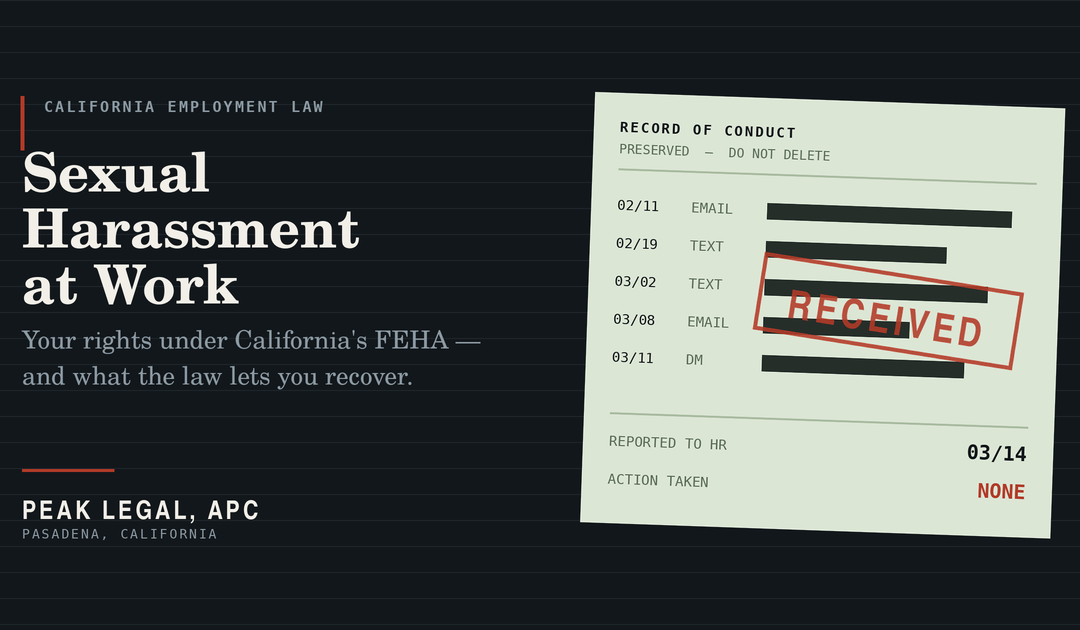
Employees who experience sexual harassment should consider documenting what occurred, preserving relevant emails, text messages, photographs, or other communications, and identifying potential witnesses. Reporting the conduct through an employer’s established reporting procedure may also be important, although employees should consider speaking with an experienced employment attorney about their circumstances and legal options.
California workers may also have the right to file a complaint with the California Civil Rights Department (CRD) and, where appropriate, pursue a lawsuit. California generally provides a three-year period for filing a CRD employment discrimination or harassment complaint, although deadlines and procedural requirements can vary depending on the circumstances.
If you have experienced sexual harassment at work, you do not have to face the situation alone. An experienced California employment attorney can evaluate the circumstances, explain your rights, help preserve evidence, and determine whether you may have claims for sexual harassment, retaliation, discrimination, or related workplace violations.
If you believe you have been subjected to sexual harassment or retaliation in the workplace, contact our California employment law attorneys to discuss your situation and learn about your legal options.
🚀 Seeking Legal Guidance on Employment Law? – Unsure if your workplace concerns fall under California's employment laws? Let Peak Legal help you navigate the complexities of your situation with a tailored consultation.
📧 Email Your Concerns! – Have a detailed scenario or specific questions? We're here to listen and provide the advice you need. Reach out to us at info@peaklegalca.com. Your legal solution is just an email away.